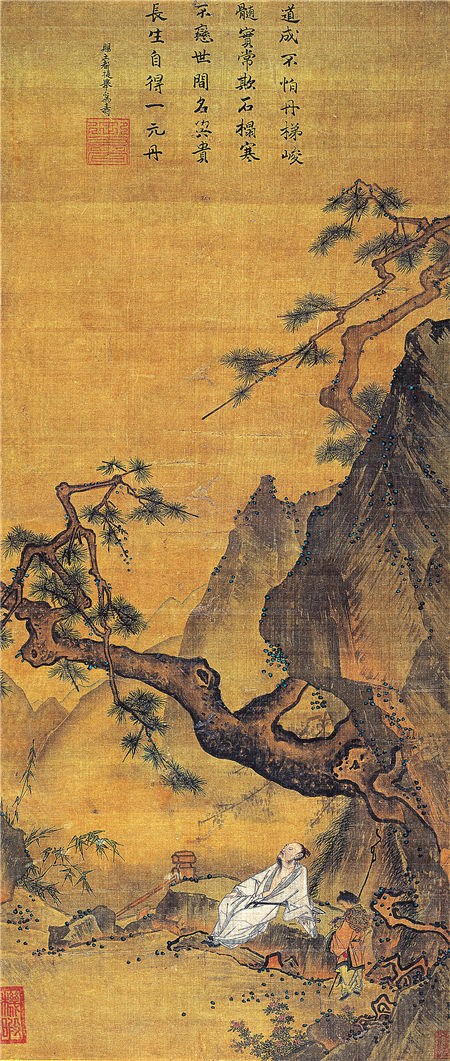
Ma-Xia School
Introduction
The Ma-Xia School is an influential art movement originating from the Song Dynasty in China. Named after the prominent artists Ma Yuan and Xia Gui, this school is celebrated for its innovative approaches to landscape painting. The Ma-Xia School is distinguished by its partial-focus composition technique, often referred to as the "one-corner Ma" and "one-side Xia" style, which uses a significant amount of white space to accentuate contrast and create balance between substance and void. This unique style resonated deeply with the aesthetics of Chinese art, emphasizing a nuanced understanding of nature and a spiritual connection to the landscapes depicted. The Ma-Xia School has left an enduring legacy that influenced subsequent generations of artists, ensuring its place in the annals of Chinese art history.
History
Founding and Development
The Ma-Xia School emerged during the Southern Song Dynasty (1127-1279) when artists like Ma Yuan and Xia Gui redefined the landscape painting genre. They served as court artists at the imperial academy of painting in Hangzhou, then the capital city of the Southern Song Dynasty. Both artists played pivotal roles in transitioning from the panoramic-view structure prevalent during the Northern Song era to a more focused and intimate representation of nature. Their work often depicted landscapes, mountains, and waters, utilizing a technique that captured the essence of the natural world with minimalistic and expressive brushstrokes. This approach not only highlighted the artists' skill in conveying depth and emotion with simplicity but also reflected a philosophical outlook that was deeply rooted in the spiritual and aesthetic values of the time.
Key Figures
Ma Yuan and Xia Gui are the central figures of the Ma-Xia School. Ma Yuan, often referred to as "one-corner Ma," was known for his ability to depict expansive landscapes within a confined space, focusing on details with precision and creating a sense of harmony between the depicted elements and the surrounding void. Xia Gui, or "one-side Xia," complemented this style with his own approach, emphasizing balance and fluidity in his compositions. Their collaborative and individual contributions helped develop a distinctive academic painting style that has continued to influence Chinese art. The Ma-Xia School's legacy is preserved through their works, which remain significant in the study of traditional Chinese painting techniques and aesthetics.
Philosophy and Teachings
Core Beliefs
The Ma-Xia School is grounded in a philosophy that seeks to present the infinity and tranquility of the universe through art. This approach is deeply connected to the spiritual and philosophical beliefs of the era, especially Confucianism, which emphasizes the exhaustive study of things for a thorough acquisition of knowledge. Artists of the Ma-Xia School aimed to connect with the spiritual world of ancient intellectuals and their practice of gewu zhizhi. Their art is not just a depiction of the natural world but an exploration of the deeper truths of existence, encouraging viewers to find a sense of peace and enlightenment through their engagement with the artwork.
Influences and Innovations
The Ma-Xia School was heavily influenced by the artistic traditions of the Song Dynasty, characterized by its innovative brushwork and compositional techniques. The school's artists incorporated naturalism and spirituality into their work, creating a harmonious blend that resonated with the cultural spirit of the time. They introduced the technique of using white space as a significant compositional element, which accentuated contrast and highlighted the depicted subjects. This innovation allowed for a more profound expression of the artist's connection to nature and provided a new way for viewers to engage with the artwork, inviting contemplation and reflection.
Cultural Impact
Contributions to Education
The Ma-Xia School's contributions to education are evident through its influence on the training and development of artists in the Song Dynasty and beyond. The school's techniques and philosophical teachings became integral to art education, particularly within the imperial academy of painting. Students were taught to appreciate the subtleties of nature and to express their understanding through the use of space and brushwork. This educational legacy persisted across generations, ensuring that the principles and techniques of the Ma-Xia School remained a vital part of Chinese art education and practice.
Influence on Chinese Culture
The Ma-Xia School has had a lasting impact on Chinese culture, shaping the visual language of landscape painting and influencing other art forms. Its emphasis on balance, harmony, and the interplay between substance and void has permeated various aspects of Chinese cultural expression, from poetry to garden design. The school's approach to depicting nature as a reflection of the human spirit continues to resonate with contemporary artists and audiences, illustrating a timeless connection between art, philosophy, and the natural world.
Notable Works
The notable works of the Ma-Xia School include masterpieces by Ma Yuan and Xia Gui that exemplify the school's unique style and philosophical outlook. These works, often featuring landscapes, mountains, and waters, capture the essence of the natural world with minimalistic and expressive brushstrokes. The use of white space in these paintings creates a sense of balance and harmony, inviting viewers to contemplate the deeper truths of existence. The Ma-Xia School's artworks remain significant in the study of traditional Chinese painting techniques and aesthetics, preserving the legacy of this influential art movement.
Criticisms and Debates
While the Ma-Xia School is celebrated for its contributions to Chinese art, it has also been the subject of criticism and debate. Some art historians argue that the school's focus on minimalism and white space may have limited the potential for more detailed and intricate compositions. Others contend that the school's philosophical approach, which emphasizes contemplation and reflection, may not appeal to audiences seeking more immediate or representational forms of art. Despite these criticisms, the Ma-Xia School continues to be revered for its innovative techniques and spiritual insights, highlighting the enduring relevance of its artistic and philosophical contributions.
Legacy and Influence Abroad
The legacy of the Ma-Xia School extends beyond China, influencing artists and art movements around the world. Its emphasis on minimalism, balance, and harmony has found resonance in various cultural contexts, inspiring artists to explore similar themes and techniques in their own work. The Ma-Xia School's approach to art as a reflection of the natural world and the human spirit has contributed to a broader understanding of the interconnectedness of art and philosophy. As a result, the school's influence continues to be felt in contemporary art practices, highlighting its enduring significance in the global art community.








